Designing loyalty across habits and generations
I led consumer research and helped design loyalty strategy around progression, recognition, and attainability.
Duration
2 months
Role
Design Researcher
Understanding loyalty beyond repeat visits
Bluebird was a national coffee chain with one of the largest loyalty programs in the category. The program worked well for frequent customers, but struggled to create meaningful engagement for younger, occasional, and price-sensitive segments.
To understand where the program was resonating and where it was falling short, we looked across both visit frequency and generation to understand different expectations on value, habits, recognition, and engagement.
At the same time, peer brands were finding new ways to engage younger customers through challenges, drops, games, and social rewards.
What Gen Z loyalty looked like elsewhere
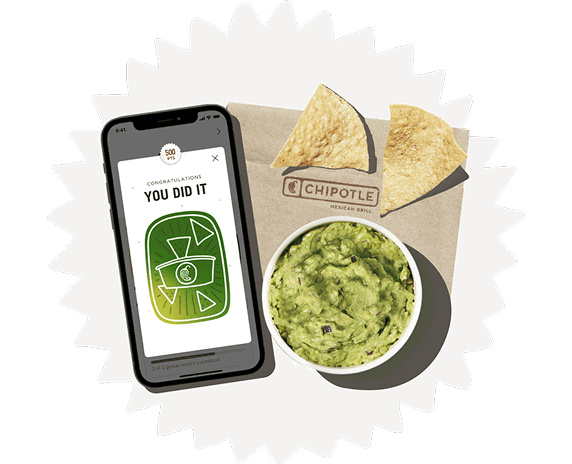
Chipotle
Gamified its rewards through in-app challenges, monthly drops, and games tied to points. Grew to 21M+ members.
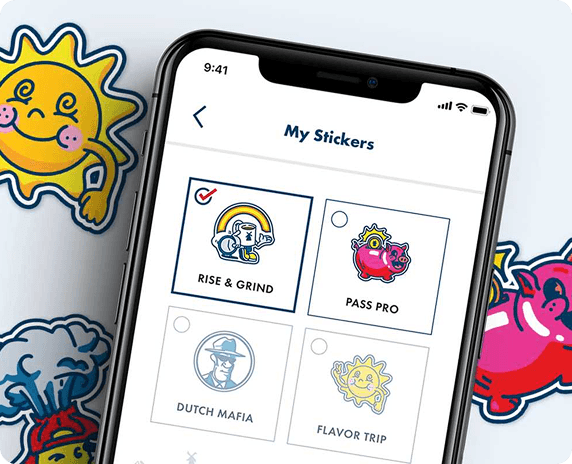
Dutch Bros
Built social mechanics into loyalty (stickers, shareable rewards). 72% of transactions linked to loyalty since launch.
Fig 1. Gen Z loyalty program success among Quick Service Restaurants
Loyalty is reachable, recognizable, and easy to understand
Across segments, customers wanted rewards that felt within reach, progress they could understand quickly, and moments of recognition that felt personal enough to matter.
Gen Z want rewards that feel earned, playful, and personal
- 1. Multiple earning paths matter. Badges without tangible rewards won’t resonate
- 2. Gamified experiences that don’t require a purchase are the strongest engagement hook
- 3. Personalized, low-barrier challenges build brand affinity better than spend-based milestones
Fig 2. Insight cards summarizing universal loyalty needs, behavioral segments, and generational differences from interviews, survey findings, and concept testing.
From transactional rewards to a modular loyalty system
Customers needed clearer progress, personal recognition, and achievable rewards based on their visit frequency to sign up for and stay engaged in a program.
The strategy translated those needs into three program mechanics.
The following screens are lo-fi wireframes developed to demonstrate the proposed program structure.
Rewards journey at a glance
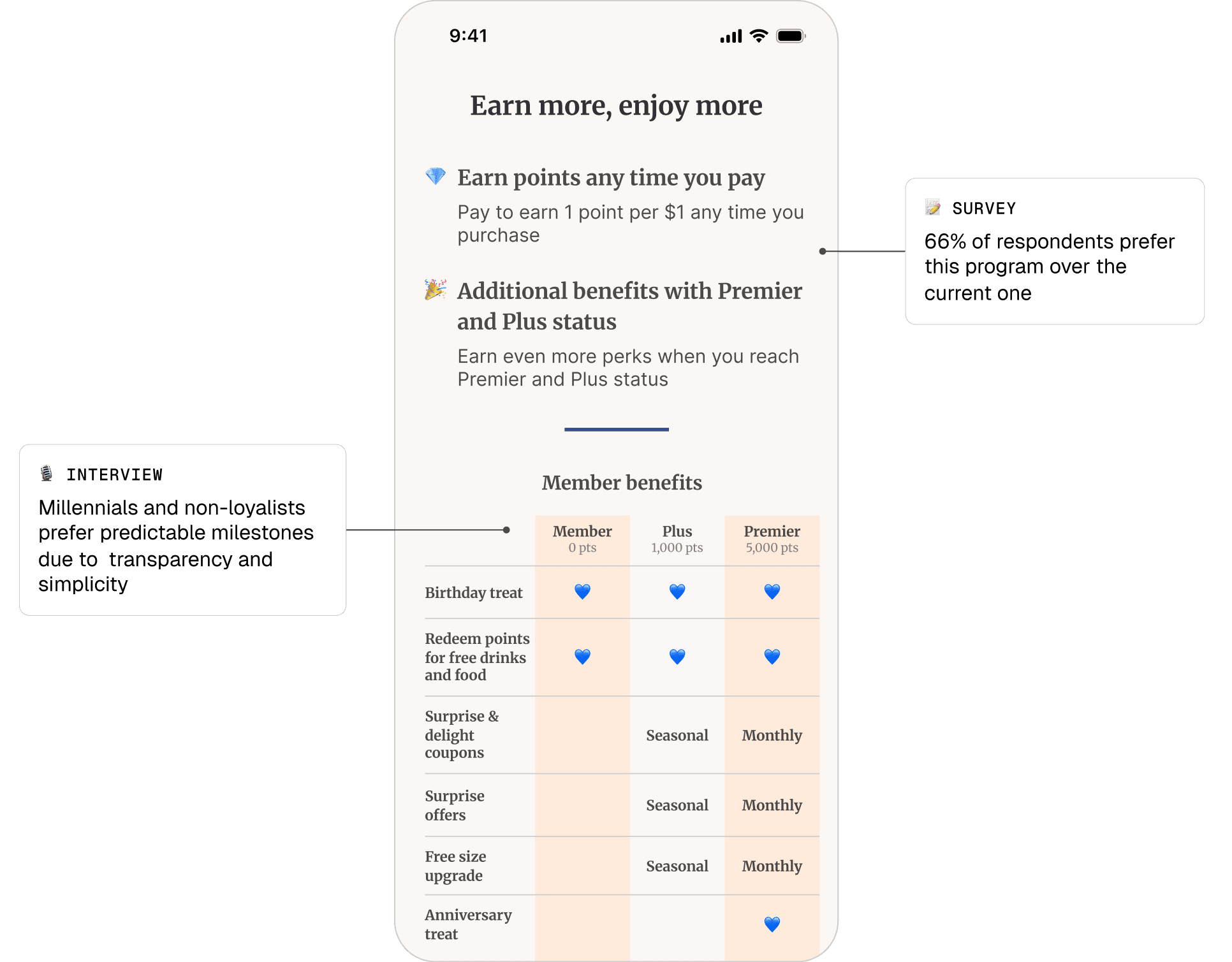
Membership design made the program easier to scan and understand the program value and how to keep participating.
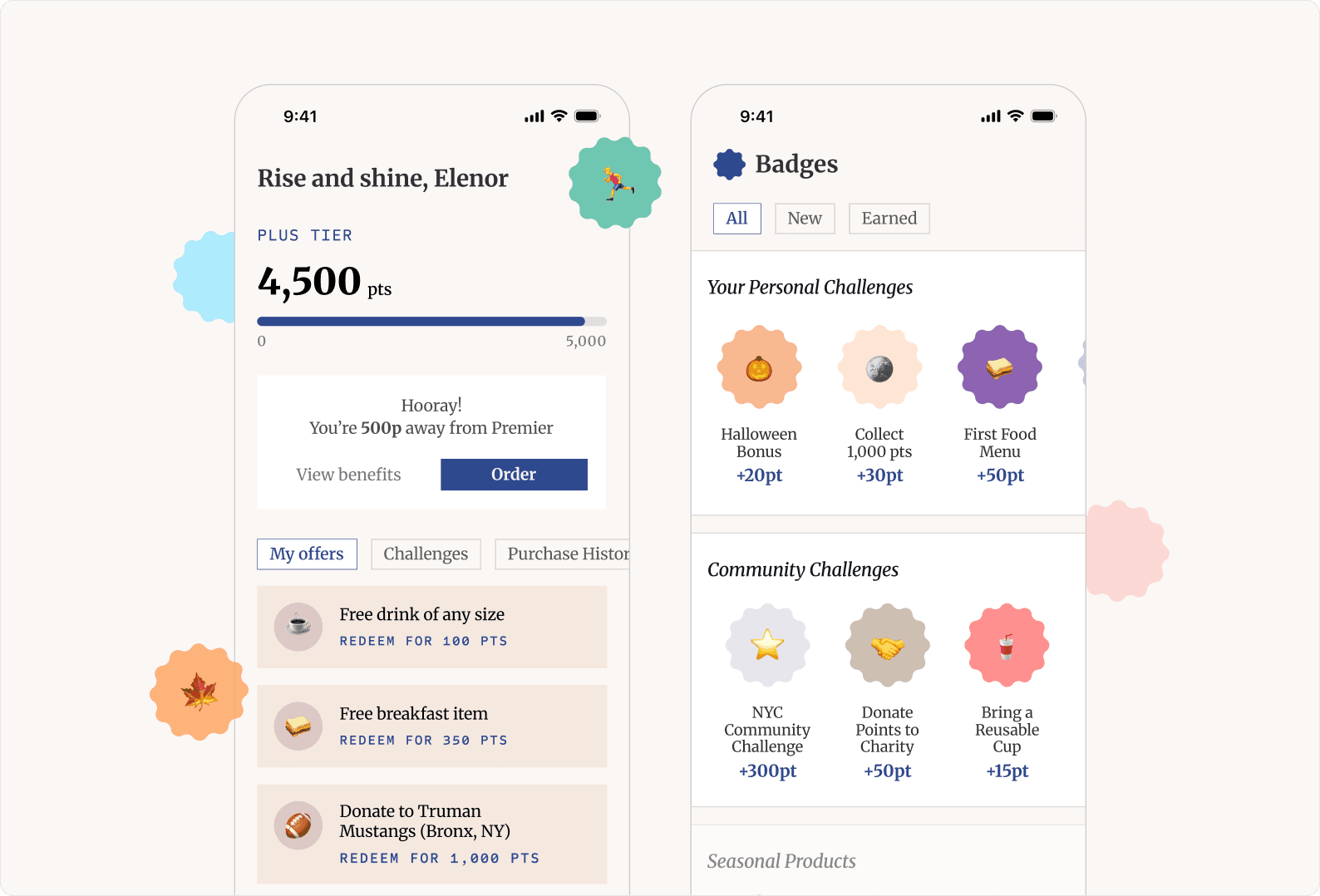
A home for progress and perks
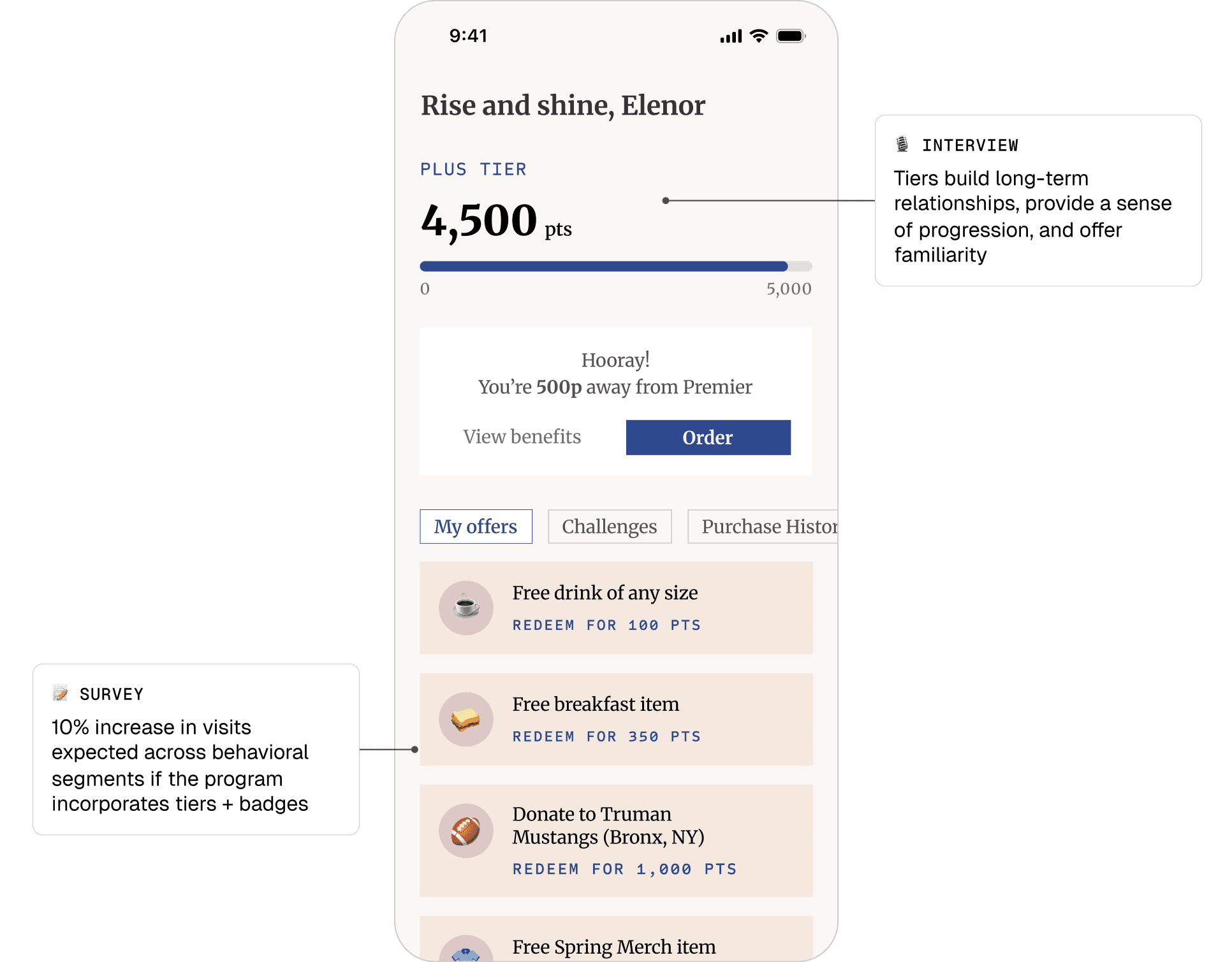
The rewards home combined long-term tier progress with short-term offers and challenges.
Recognition beyond transactions
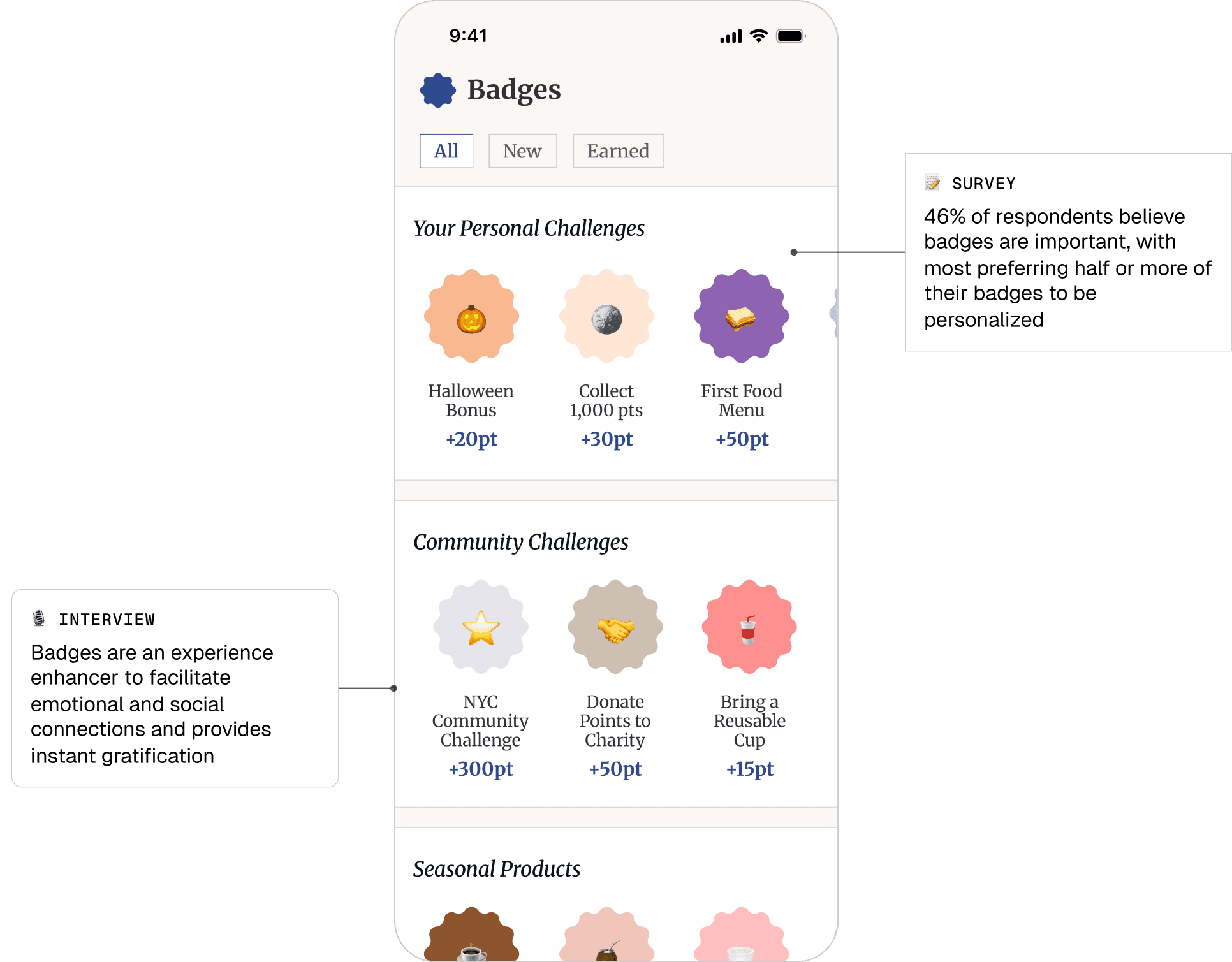
Badges gave customers playful, personalized ways to earn rewards through personal goals, community challenges, and seasonal behaviors.
Impact & learnings
The strategy projected $200M+ in incremental sales potential and shaped Bluebird's loyalty roadmap. A refreshed program with tiered membership launched the following year.
Two takeaways:
- A loyalty program can strengthen a brand relationship, but it can't replace a broken one. Even when the mechanism worked, brand affinity determined adoption
- For Gen Z, retention looks more like participation than continued purchase. They responded better to brands that experimented openly and let them into what the brand was becoming