Democratizing access to USDA conservation funding
Greenfield was an AgTech startup using field-level data to help farmers adopt more sustainable practices.
I led the 0-to-1 design of Greenfield's USDA module to help farmers and advisors evaluate land concerns, identify eligible practices, and apply with confidence.
Role
Product designer
Team
Product, Engineering, Data science, Policy experts
Duration
15 weeks
Impact
Est. application time
-50%
USDA contract win
$80M
Epics launched
8
States launched
19
"I want [my farmers] to see and understand the rules for each program, and the payments each program offers so they can choose the one best suited to their operation."
— Agronomist Testimonial
USDA funding existed to help farmers address land issues, but the path to securing it was difficult to evaluate and navigate
EQIP distributes billions in annual funding to help farmers adopt sustainable practices, but only 25% of applicants get accepted.
Determining whether a practice was eligible, likely to be approved, and financially worthwhile required navigating fragmented documentation, funding criteria, and local USDA processes.
Applying for EQIP meant navigating two types of uncertainty
1. Do I qualify for this?
175
Practices, each with requirements that vary by program, state, and county
Each practice is prioritized based on
- Fiscal year
- Location
- Funding pool
- Land issue
- Which practices you combine
- First-time applicant status
- Underserved or veteran status
and more
2. Is it worth applying?
25%
of applications are accepted across criteria that are difficult to navigate
2 mo
wait time for scheduling the initial site visit with local expert
“It's a black box for us with what will be approved and not approved since the criteria is not shared.”
— Agronomist
Fig 1. Two types of uncertainty that kept farmers from applying to EQIP
I translated policy complexity into a product workflow
The team collaborated on understanding how USDA logic worked. I used a test-and-learn process to move from the application discovery to production design.
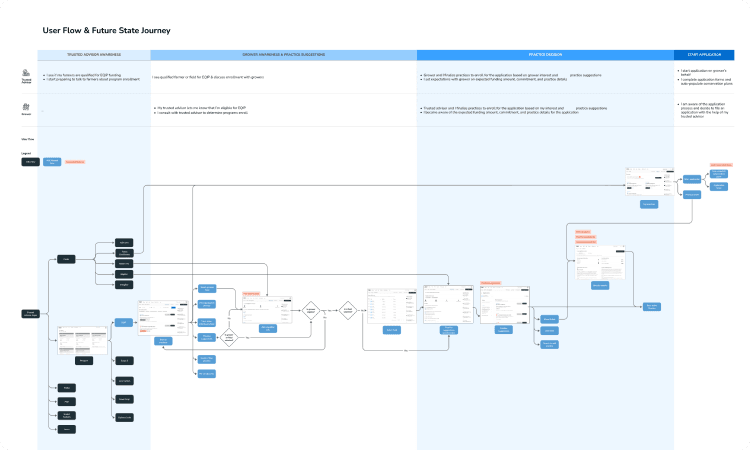
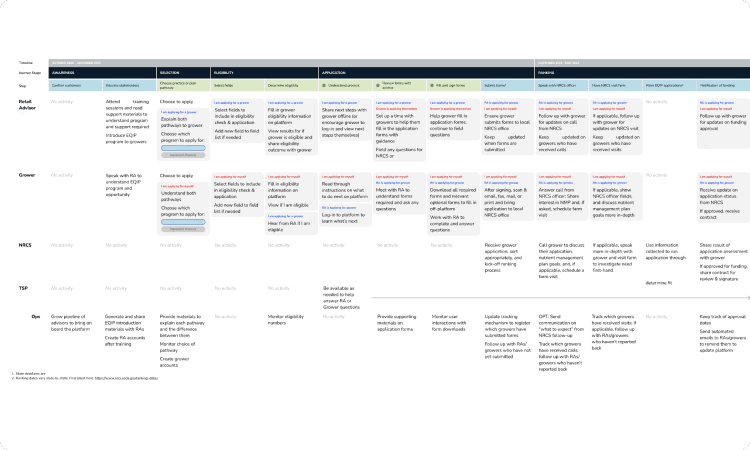
Fig 2. Design processes included workflows mapping, research, testing, and iteration
Greenfield turned scattered USDA knowledge into a guided path to sustainability
By codifying fragmented county-level practice and application data, the module launched with 8 epics and helped led to Greenfield's USDA partnership, including an $80M contract.
Assess land issues and eligibility
Using field data and satellite imagery, the module helped users identify eligible fields quickly. Then through a questionnaire, Greenfield mapped conservation practices based on their land issues.
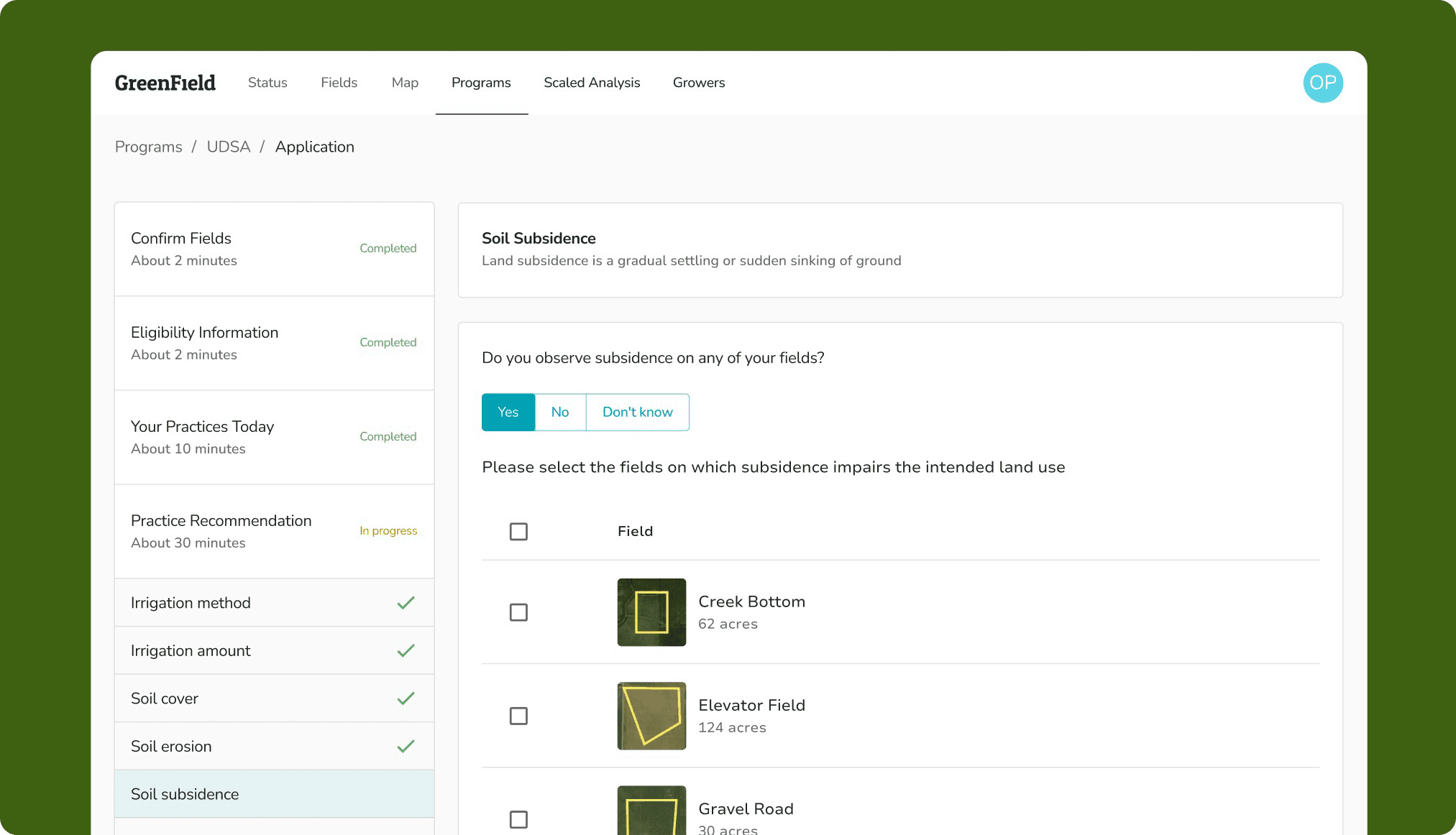
Fig 3. Field level context helped farmers connect land concerns to USDA supported practices
Show the value and effort behind each practice
Greenfield matched land concerns to relevant conservation practices. Each recommendation came with reimbursement potential, implementation requirements, and yield impact. It helped farmers evaluate the best strategy for their farming operation.
Fig 4. Recommendations paired practice fit with reimbursement details
Review application strength before moving forward
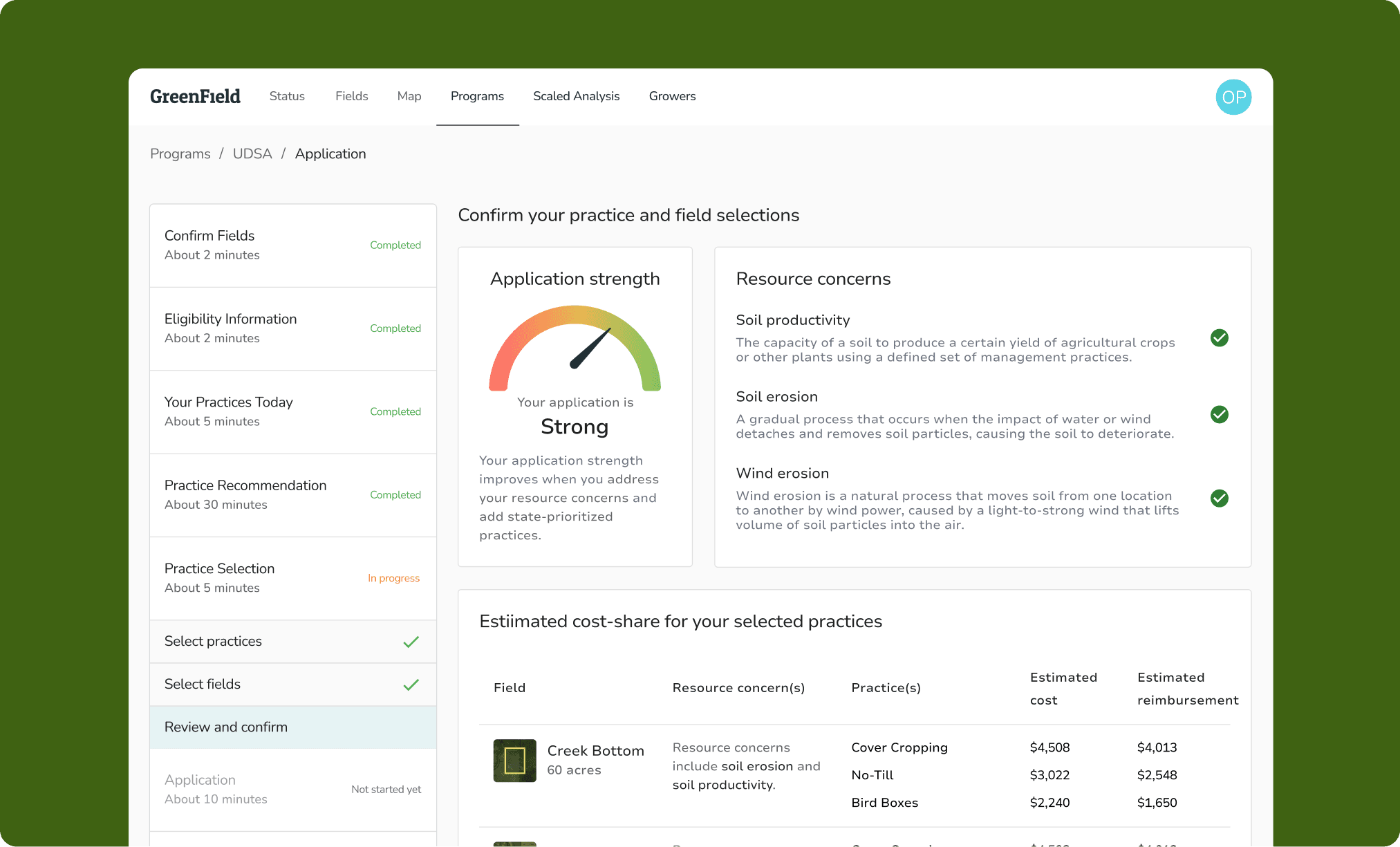
Before submitting, farmers could review selected fields, practices, resource concerns, estimated reimbursement, and application strength in one place.
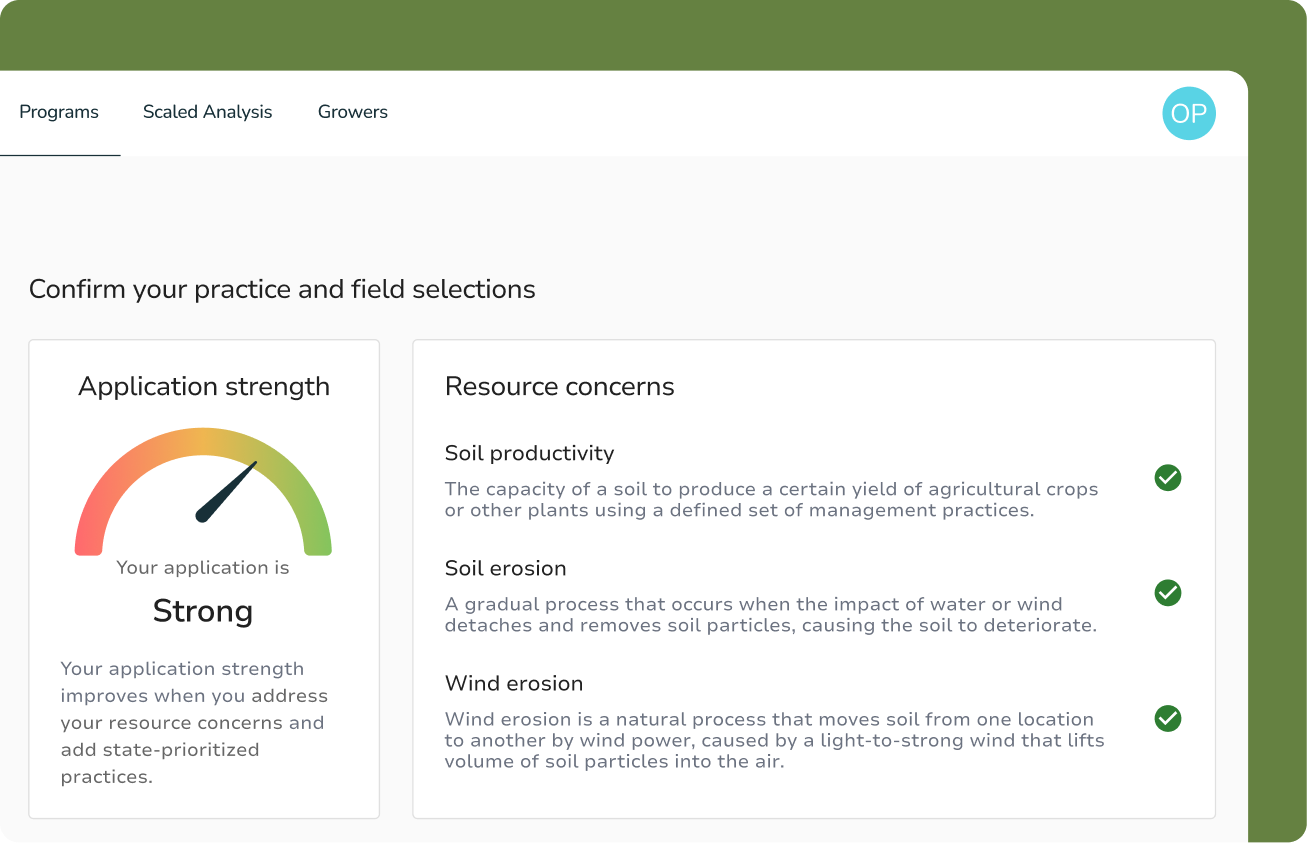
Reduce feeling of applying blindly
The confidence score helped users understand whether selected practices created a stronger application before submission
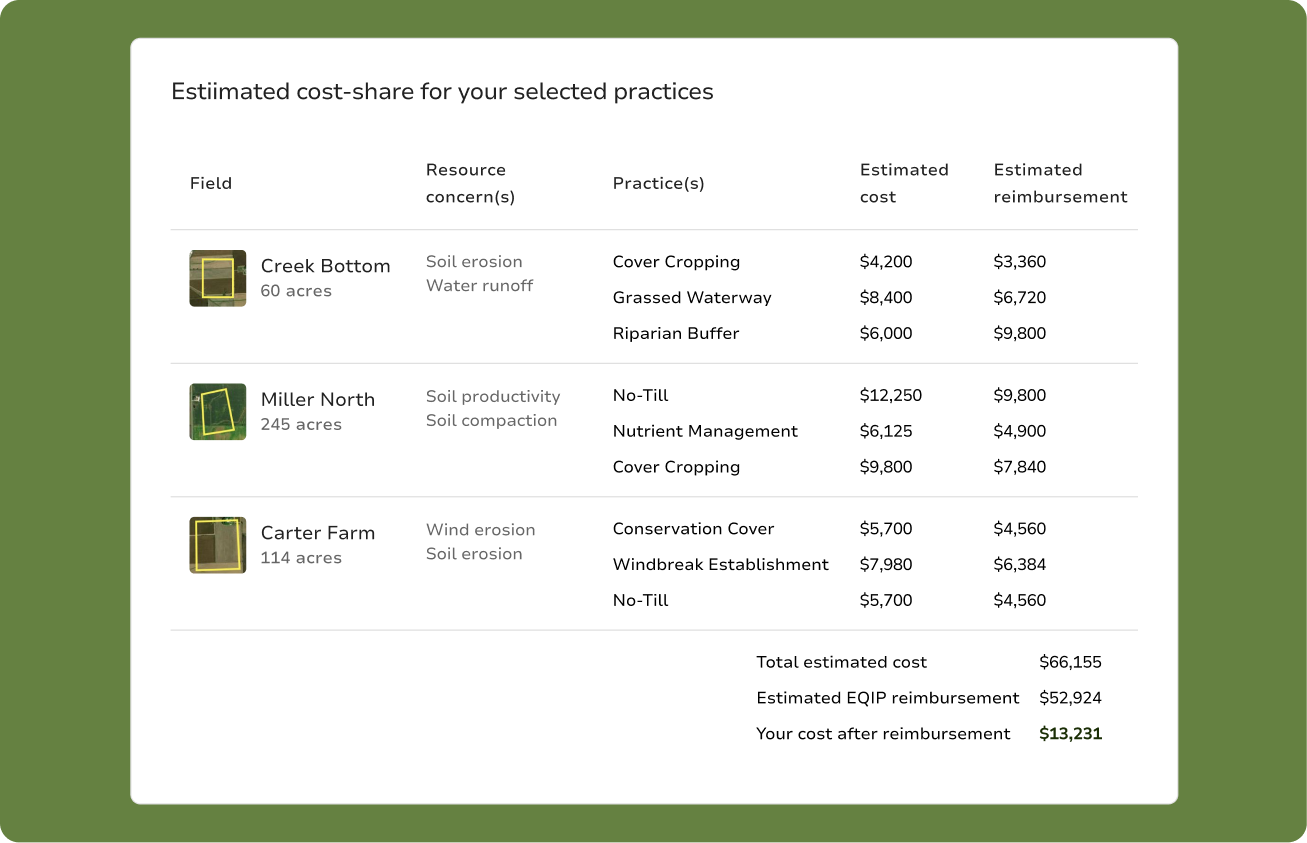
Make the financial decision visible before applying
The cost-share review made the tradeoff concrete before they moved into the formal application process
Reflection
Design can help bridge the gap between policy intent and adoption
This project reminded me that access and impact are not created by policy alone. They happen when people can understand what is available, trust what applies to them, and take the next step.
I learned how to protect user value through build
The USDA module required multiple rounds of alignment with engineering around what could be simplified and what could not be compromised without hurting the UX.